

 English
 中文简体
中文简体 Español
Home / News / Industry News / What Is Another Name for Sodium Fluoride? NaF, Sodium Monofluoride and Other Names
A purchasing manager at a metal-finishing plant opens a supplier email and finds two attachments describing the same shipment in different words. One says "sodium fluoride, 99% min, technical grade." The other says "sodium monofluoride, 25 kg drums." A week later, someone forwards a water-treatment specification that mentions only "fluoride compound, NSF 60 certified," and a laboratory colleague asks whether "NaHF2" on an old inventory sheet is the same material. The question that ties all of these together is simple: what is another name for sodium fluoride?
The answer splits cleanly in two. The first group of names refers to exactly the same chemical. Sodium fluoride has the formula NaF, and it also appears in documents as sodium monofluoride, fluoride of sodium, natrium fluoride or natriumfluorid, fluorure de sodium, and fluoruro de sodio. Alongside those names you will see identifier codes: CAS 7681-49-4, EC number 231-667-8, UN 1690, HS code 2826.11, PubChem CID 5235, and the cosmetic labeling name Sodium Fluoride. All of them point to one compound.
The second group contains names that sound almost identical but describe different chemicals with different CAS numbers: sodium monofluorophosphate, sodium bifluoride, sodium fluorosilicate, sodium fluoroborate, and the radioactive form of sodium fluoride used in medical imaging. Confusing the two groups is not a harmless vocabulary problem. It can produce a failed quality check, a rejected container at customs, an incompatible process chemical in a plating bath, or a specification that no supplier can actually meet. Knowing which names are synonyms and which are look-alikes is what keeps a purchase order, a safety data sheet, and a process recipe aligned.
Sodium fluoride is an inorganic salt made of one sodium cation and one fluoride anion. Because that structure is so simple, the compound never needed a complicated systematic name. "Sodium fluoride" is both the everyday name and the preferred name used by chemical nomenclature rules. This is an important point for anyone searching for an alternative: there is no second IUPAC name hiding somewhere. The alternatives that exist come from language, from history, and from the record-keeping systems that regulators, shippers, and formulators each maintain for their own purposes.
The list below covers the names that genuinely refer to NaF. Each one is a legitimate answer to the question, but each appears in a different kind of document.
Two things are worth noticing about this list. First, every entry except the registry numbers is a naming variation rather than a chemical distinction. Second, the registry numbers are the only entries that remain stable when a document is translated, abbreviated, or reformatted. That is why experienced buyers treat the CAS number as the anchor and everything else as commentary.
| Name or identifier | Type of name | Where it usually appears |
|---|---|---|
| Sodium fluoride | Common and preferred name | Datasheets, quotations, pharmacopoeial monographs |
| NaF / FNa | Molecular formula | Labels, catalogues, journal articles, databases |
| Sodium monofluoride | Synonym | Supplier catalogues, chemical databases, some older literature |
| Fluoride of sodium | Legacy word order | Patents, historical texts, translated documents |
| Natrium fluoride / Natriumfluorid | Latin and German form | EU regulatory files, older European literature |
| Fluorure de sodium | French | French-language SDS and packaging |
| Fluoruro de sodio | Spanish | Spanish-language SDS and packaging |
| Sodium Fluoride | INCI cosmetic name | Toothpaste, mouthwash, and oral care labels |
| CAS 7681-49-4 | Registry number | Certificates of analysis, SDS, customs documents |
| EC 231-667-8 | EU registry number | EU safety data sheets, REACH registration dossiers |
| UN 1690 | Transport number | Dangerous goods declarations, drum markings |
| HS 2826.11 | Customs heading | Import and export tariff filings |
There is nothing chemically complicated about NaF. The naming complexity is entirely administrative, and it helps to understand where each layer comes from before deciding which name to use in a given document.
Chemical nomenclature has several registers that coexist. Systematic names describe structure. Common names reflect how a material was first isolated or traded. Trade names belong to whoever markets the product. Registry numbers belong to indexing bodies. Sodium fluoride happens to sit at the intersection of all four: the systematic name and the common name are identical, which is unusual and convenient, but the trade and registry layers keep generating additional strings. When a database lists sodium monofluoride as a synonym, it is recording an industry usage, not a structural fact.
Fluorine chemistry developed simultaneously in several industrial regions, and each language built its own vocabulary around the same salts. German-speaking chemists wrote "Natriumfluorid," French suppliers wrote "fluorure de sodium," and Spanish-speaking markets wrote "fluoruro de sodio." A supplier that publishes safety data sheets in multiple languages will legitimately print three or four names for the same drum of material, which is why a buyer comparing documents from two countries may briefly suspect a discrepancy that does not exist.
Before electronic databases, a material was identified by name and empirical formula. As trade volumes and regulatory requirements grew, that became unreliable. CAS numbers, EC numbers, UN numbers, and HS codes were introduced so that a customs officer, a transport inspector, and a plant chemist could all refer to the same entry without translating anything. The result is that a modern certificate of analysis typically leads with a name and a CAS number, and experienced reviewers read the number first.
Some older documents still use word orders such as "fluoride of sodium," and some industry segments keep informal names alive long after the formal name has settled. Water treatment operators frequently speak of "fluoride" without naming the compound at all, because the dosing calculation depends on the fluoride ion concentration rather than the salt that delivers it. Dental professionals often say "fluoride varnish" when the active ingredient is stated as sodium fluoride on the packaging. None of this changes the identity of the substance, but it does mean that a specification review should always end with a check of the identifier codes rather than the wording.
If one confusion deserves its own section, it is this one, because the two names look like near-twins and appear in the same product categories. Sodium fluoride is NaF: one sodium, one fluorine. Sodium monofluorophosphate is Na2PO3F: two sodium atoms, one phosphate group, and one fluorine, with CAS number 10163-15-2. It is a different molecule with different solubility, different assay methods, and a different release profile in oral care formulations.
The reason both names circulate together is that both are approved fluoride sources for cavity prevention. Regulatory bodies that permit fluoride in oral care typically recognize a short list of active ingredients, and that list includes sodium fluoride, sodium monofluorophosphate, and stannous fluoride. A formulator choosing between them is weighing compatibility with abrasive systems, taste, staining behaviour, and cost. A procurement officer reading a label, however, simply sees two similar words and may assume they are interchangeable.
The practical consequences of that assumption are concrete. Assay calculations differ because the fluoride content per unit mass is not the same. Analytical methods differ because a phosphate-bearing salt interferes with some fluoride-specific techniques. Labeling requirements differ because the INCI names are distinct. Substituting one for the other in an existing formulation is a reformulation, not a substitution, and it usually requires stability testing before it can be approved.
That difference in fluoride content matters more than the names suggest. A formulation delivering a target fluoride concentration needs roughly three times as much sodium monofluorophosphate by weight as sodium fluoride, which changes the entire ingredient declaration, the cost structure, and sometimes the physical stability of the paste. When someone asks whether sodium monofluorophosphate is "another name" for sodium fluoride, the honest answer is no: it is a different compound that happens to serve a similar purpose.
Beyond the monofluorophosphate case, there is a wider family of fluorine-containing compounds whose names share fragments with sodium fluoride. The differences are not cosmetic. Each has its own formula, its own CAS number, its own hazard profile, and its own set of industrial uses. The table below summarizes the ones most often mixed up in specifications, quotations, and shipping paperwork.
| Compound | Formula | CAS number | Why it is confused with NaF |
|---|---|---|---|
| Sodium bifluoride (sodium hydrogen difluoride) | NaHF2 | 1333-83-1 | Shares the word sodium and the fluoride family; an acid salt, not a neutral one |
| Sodium fluorosilicate | Na2SiF6 | 16893-85-9 | Formerly called sodium silicofluoride; used in the same water-treatment market |
| Fluorosilicic acid | H2SiF6 | 16961-83-4 | The liquid alternative used in many municipal fluoridation programs |
| Sodium fluoroborate | NaBF4 | 13755-29-8 | Contains sodium and four fluorines; a different anion entirely |
| Sodium monofluorophosphate | Na2PO3F | 10163-15-2 | Similar name, phosphate backbone, different fluoride content |
| Potassium fluoride | KF | 7789-23-3 | Same anion, different cation; sometimes offered as a substitute in flux applications |
| Ammonium bifluoride | NH4HF2 | 1341-49-7 | Shares the bifluoride structure and many surface-treatment uses |
Sodium bifluoride, also written NaHF2 and known as sodium hydrogen difluoride or sodium acid fluoride, is the compound most often mistaken for sodium fluoride in industrial settings. It contains an acidic hydrogen, which changes its behaviour dramatically: it is more reactive, more corrosive, and it releases hydrogen fluoride far more readily when it contacts moisture or acid. Those properties make it valuable in glass etching, aluminium surface treatment, and certain metal finishing operations, but they also mean that substitution in either direction is a process change, not a like-for-like swap. Buyers who need the bifluoride chemistry rather than the neutral salt will find a detailed performance and application analysis of sodium bifluoride useful for comparing grades and handling requirements.
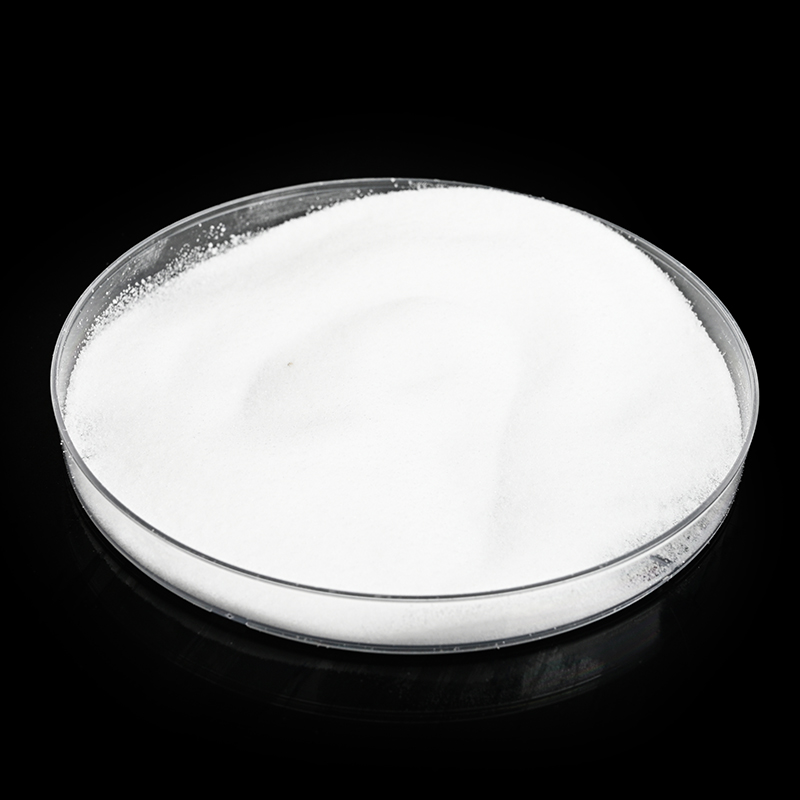 Sodium Bifluoride NaHF2 Powder for Etching and Metal TreatmentDetailed NaHF2 product information covering ≥98% powder, glass etching, metal treatment, fluorination, and safety precautions; useful for comparing grades and handling requirements.View Product →
Sodium fluorosilicate was historically called sodium silicofluoride, and the older name still appears in municipal documents. It is a white powder delivering fluoride in water treatment, and it sits alongside fluorosilicic acid as one of the practical alternatives to sodium fluoride in that market. The names are similar enough that a specification review can slide past them, but the formulas and the handling requirements are entirely different.
Sodium fluoroborate, NaBF4, is sometimes listed next to sodium fluoride in supplier catalogues because both names contain sodium and fluorine. In reality it is a tetrafluoroborate salt used in electroplating baths, soldering fluxes, and specialty chemical synthesis. Its fluorine is bound in a complex anion rather than as a free fluoride ion, so its solubility, acidity, and reactivity are different from NaF in almost every practical respect. A request for "sodium fluoro" anything should always be confirmed with the CAS number before a quotation is issued.
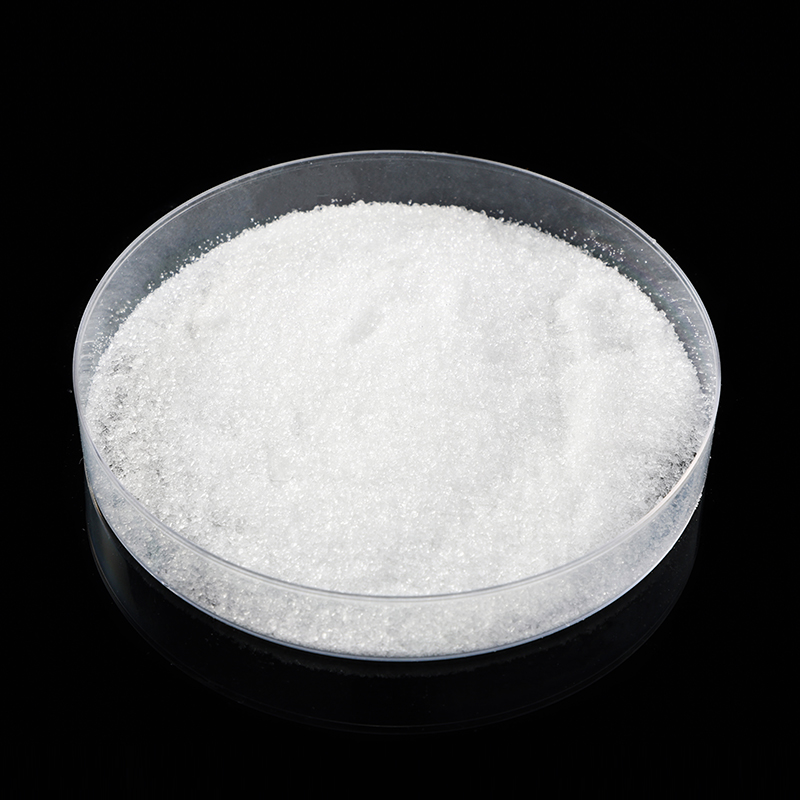 Sodium Fluoroborate NaBF4 for Fluxes and Chemical SynthesisWholesale NaBF4 crystalline compound, ≥98%, packed in composite bags or drums; differs from NaF due to complex anion, useful for confirming CAS and applications.View Product →
There is one further collision that surprises people outside medicine. In nuclear medicine, the phrase "sodium fluoride" can refer to fluoride F-18, a radioactive tracer used in positron emission tomography bone imaging. It contains the isotope fluorine-18 instead of natural fluorine, has a half-life measured in hours, and is handled under pharmaceutical rather than industrial rules. When a literature search returns articles about bone scans instead of water fluoridation, this is the reason. The industrial and the radiopharmaceutical materials share a name and a formula pattern, and nothing else.
Few places demonstrate the naming problem better than a municipal water treatment plant. Operators routinely refer to "adding fluoride," and internal records may use that phrase for years. The purchase specification, however, has to name a specific compound, and there are three common choices, each with its own strength, feeding equipment, and safety procedures.
All three deliver the same fluoride ion to the finished water. That is why a utility manager may describe them interchangeably, and it is also why a supplier receiving a vague enquiry has to ask a clarifying question. In North America, drinking water chemicals are commonly specified against standards such as the AWWA series for fluoride chemicals together with NSF/ANSI 60 certification, and those documents always identify the compound by its own name and CAS number rather than by the generic term.
The same logic applies to the acid form in industrial use. Fluorosilicic acid appears in water fluoridation, in some metal treatment processes, and as a raw material in fluoride chemical production. A practical overview of what fluorosilicic acid is used for explains where the liquid form fits and why it is chosen over the powdered alternatives.
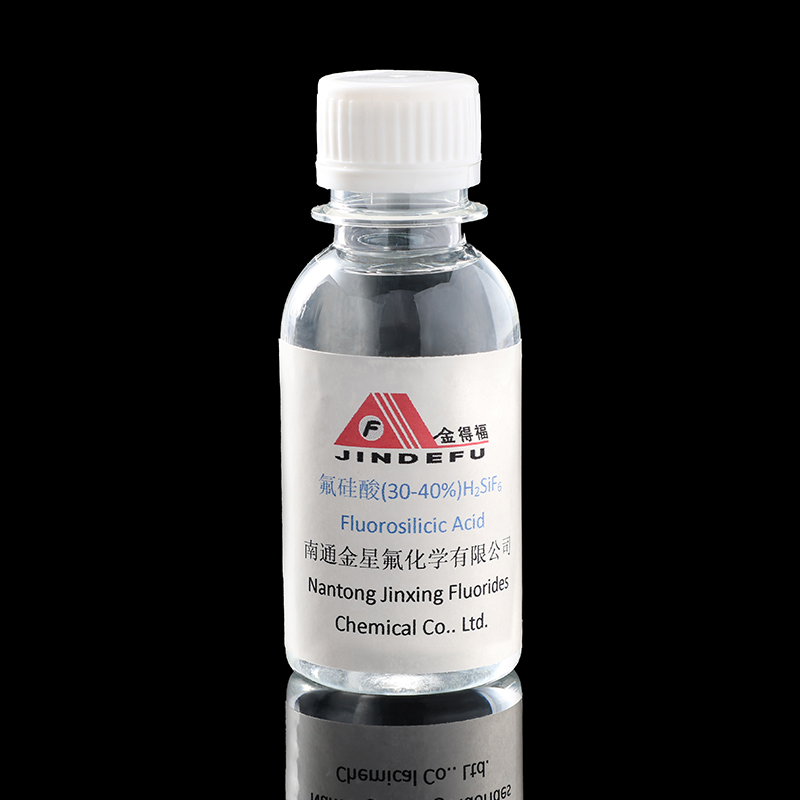 Fluorosilicic Acid 40% H2SiF6 Liquid for Fluoride Chemical ProductionDetailed overview of corrosive 40% H2SiF6 liquid, covering water fluoridation, metal treatment, and fluoride chemical production; useful for comparing liquid versus powdered alternatives.View Product →
On a toothpaste carton, the name is almost always sodium fluoride, frequently written in the INCI format with a percentage beside it. That single word hides an enormous range of concentrations, and the concentration is what actually defines the product. Two tubes bearing the same active ingredient name can differ by a factor of twenty in fluoride content.
For a manufacturer or a compounding pharmacy, the naming issue resurfaces in a different form. Pharmacopoeial grades such as Sodium Fluoride USP or the corresponding European Pharmacopoeia monograph define assay limits, heavy metal limits, loss on drying, and identification tests. A certificate of analysis quoting "sodium fluoride, USP grade" is making a specific claim about testing, not just about identity. When a buyer requests an alternative name such as sodium monofluoride, a compliant supplier will normally restate the pharmacopoeial name and the grade on the quotation, because those are what the quality system recognizes.
There is also a labeling dimension. Cosmetic and oral care products in many markets must declare ingredients by INCI name, while industrial shipments must declare the chemical name and the transport number. A single manufacturing site may therefore print three different labels for material from the same batch: one for the toothpaste customer, one for the industrial customer, and one for the export container.
In heavy industry, sodium fluoride is seldom called sodium fluoride during daily operations. It is called by the role it plays in a process, and that habit generates yet another layer of informal names.
In aluminium smelting, fluoride salts are used to control the composition of the electrolyte bath, and plant personnel speak in terms of bath ratio adjustments rather than chemical names. In metal finishing, fluoride-containing solutions appear in pickling, etching, and surface preparation steps, where the fluoride source may be sodium fluoride, ammonium bifluoride, or a formulated blend depending on the substrate and the desired finish. In glass and ceramics, fluoride compounds are used in etching and in certain specialty formulations, and the purchasing conversation often begins with a performance requirement rather than a chemical name. In welding and metallurgy, fluoride salts appear in flux and electrode coating formulations, where they influence melting behaviour and slag properties.
Each of these applications has its own specification language. A plating line may specify free fluoride concentration in grams per litre, a smelter may specify a particle size distribution and a moisture limit, and a glass processor may specify an assay range and a maximum iron content. In all three cases, the commercial name on the purchase order may be generic while the technical requirement is highly specific. That is why a supplier that manufactures a broad inorganic fluoride range, such as Nantong Jinxing Fluorides Chemical, tends to organize quotations around application data rather than around synonyms. The naming question is answered in the first line of the datasheet; the rest of the document is about fit for purpose.
It is also worth noting that sodium fluoride itself is not the only simple fluoride in industrial circulation. Potassium fluoride, barium fluoride, lithium fluoride, and strontium fluoride all serve specific markets, and each of them has collected its own set of alternative names, trade descriptions, and regional spellings. The pattern described in this article repeats across the whole family. Understanding why sodium fluoride has several names is really about understanding how the inorganic fluoride trade documents itself.
Verification is a paperwork exercise before it is a laboratory exercise. A buyer who confirms four fields on a quotation will eliminate nearly every naming risk: chemical name, CAS number, grade, and packaging. The grade deserves particular attention because the same compound is sold at very different purity levels for very different purposes, and the word "sodium fluoride" alone does not tell you which one you are being offered.
| Grade | Typical assay | Key checks | Typical use |
|---|---|---|---|
| Technical grade | 97% to 99% | Moisture, water insolubles, chloride, sulfate | Metal finishing, fluxes, chemical intermediates |
| Water fluoridation grade | Typically 95% and above | Heavy metals, arsenic, particle size, certification to drinking water standards | Municipal water treatment |
| Pharmacopoeial grade | 98.5% to 100.5% on a dried basis | Assay by titration, heavy metals, loss on drying, identification tests | Toothpaste, varnish, tablets, oral care |
| High purity grade | 99.9% and above | Trace metals by ICP, low chloride and sulfate, controlled particle size | Optical glass, specialty ceramics, electronics |
Several standard techniques are used to verify sodium fluoride, and asking which one a supplier uses is a quick way to gauge how seriously the material is controlled. Potentiometric titration with a fluoride ion selective electrode is common for assay. Ion chromatography separates and quantifies fluoride along with chloride and sulfate impurities. Inductively coupled plasma techniques measure trace metals at parts per million or lower. X-ray diffraction can confirm the crystal form, which matters when a customer's process depends on dissolution behaviour. Gravimetric and volumetric methods remain in wide use in pharmacopoeial testing because they are robust and easy to audit.
Transport documentation is the final checkpoint. Sodium fluoride is classified as a toxic solid under UN 1690, and the hazard statement commonly associated with it covers acute oral toxicity, with skin and eye irritation also cited in most regulatory inventories. A supplier that quotes UN 1690 correctly, provides a current safety data sheet in the buyer's language, and matches the packaging to the transport rules has almost certainly got the identity right as well. Details can shift between jurisdictions and revisions, so the current safety data sheet, not a memory of an old classification, is the document to check.
The most efficient way to avoid the whole naming problem is to write a purchase order that cannot be misread. The order does not need paragraphs of explanation, but it does need enough identifiers that a supplier cannot substitute a look-alike compound by accident.
Adding a single sentence to the order template — "Material must be sodium fluoride as defined by CAS 7681-49-4; alternative fluoride salts such as sodium bifluoride or sodium fluorosilicate are not acceptable substitutes" — removes the ambiguity permanently. It takes thirty seconds to write and prevents the kind of error that only surfaces when a batch fails incoming inspection.
The names that genuinely mean sodium fluoride are easy to summarize: sodium fluoride, sodium monofluoride, fluoride of sodium, the language variants natrium fluoride and fluorure de sodium and fluoruro de sodio, plus the identifier codes CAS 7681-49-4, EC 231-667-8, UN 1690, HS 2826.11, and PubChem CID 5235. None of them describes a second substance. They are the same salt recorded by different systems for different readers.
The names that cause trouble are the ones that merely sound similar. Sodium monofluorophosphate, sodium bifluoride, sodium fluorosilicate, fluorosilicic acid, and sodium fluoroborate all belong to the same broad fluorine family, and several of them are used in overlapping markets, which is exactly why they get confused. The reliable habit is to match on the CAS number, confirm the grade, and read the certificate of analysis rather than the first line of the quotation. Do that, and the question of what sodium fluoride is also called becomes a footnote rather than a risk.
Copyright © 2023 Nantong Jinxing Fluorides Chemical Co., Ltd. All Rights Reserved.
 Custom Fluorine Chemical Suppliers