

 English
 中文简体
中文简体 Español
Home / News / Industry News / Lithium Fluoride Molar Mass : The Complete Technical Reference for Chemistry, Industry, and Research Applications
The lithium fluoride molar mass is 25.939 grams per mole (g/mol), calculated by summing the standard atomic weight of lithium (6.941 g/mol) and the standard atomic weight of fluorine (18.998 g/mol). This value is one of the smallest molar masses of any ionic compound in routine laboratory and industrial use, a consequence of lithium being the lightest metal on the periodic table and fluorine being the lightest halogen. The low lithium fluoride molar mass directly influences several of the compound's most practically important properties, including its high melting point relative to its formula mass, its exceptionally low density among ionic solids, and the high ion charge density of both constituent ions that drives many of its distinctive chemical behaviors.
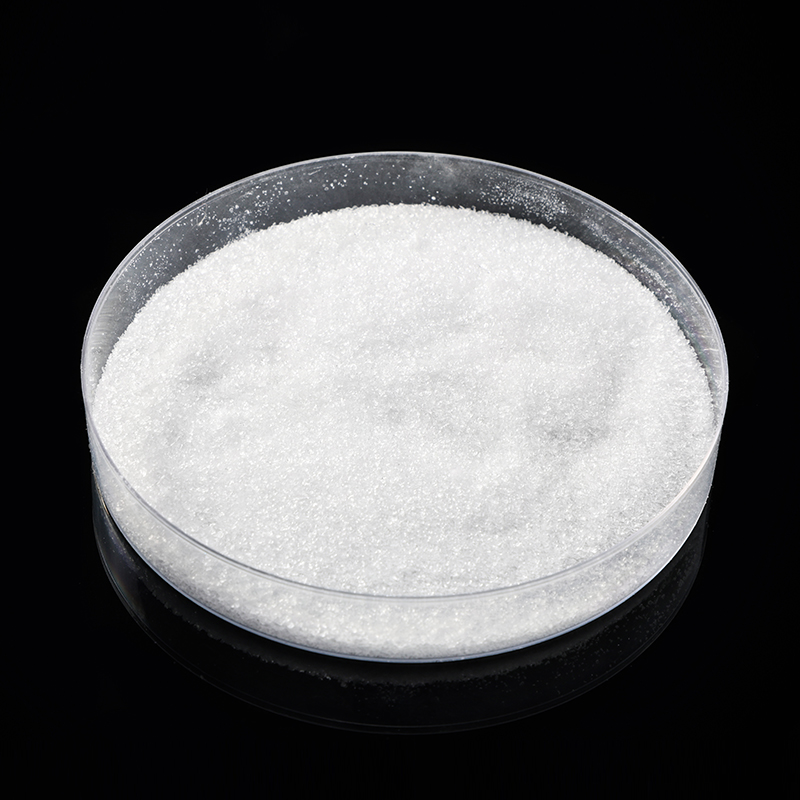
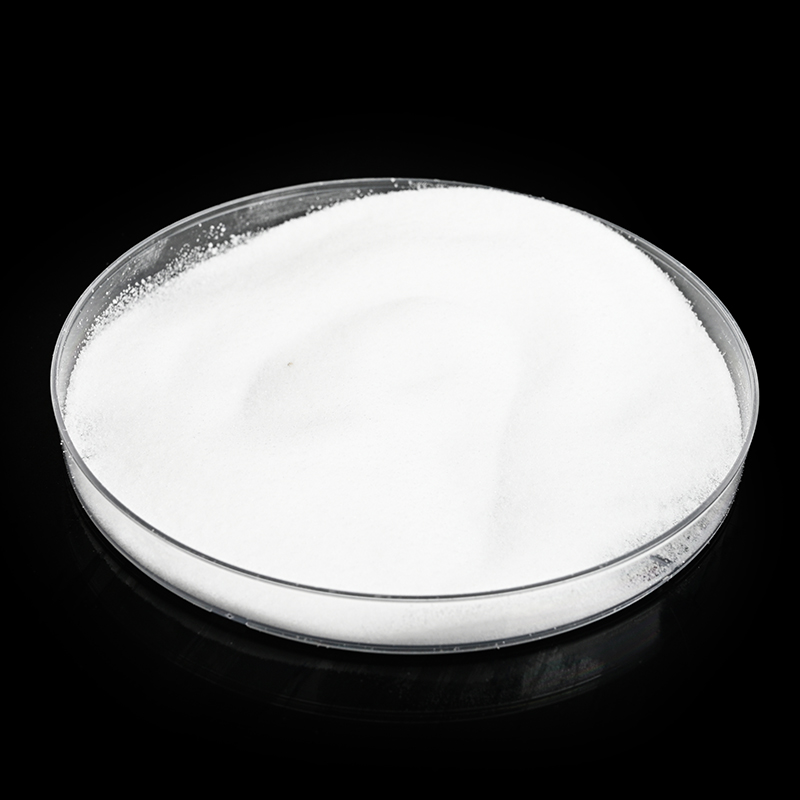
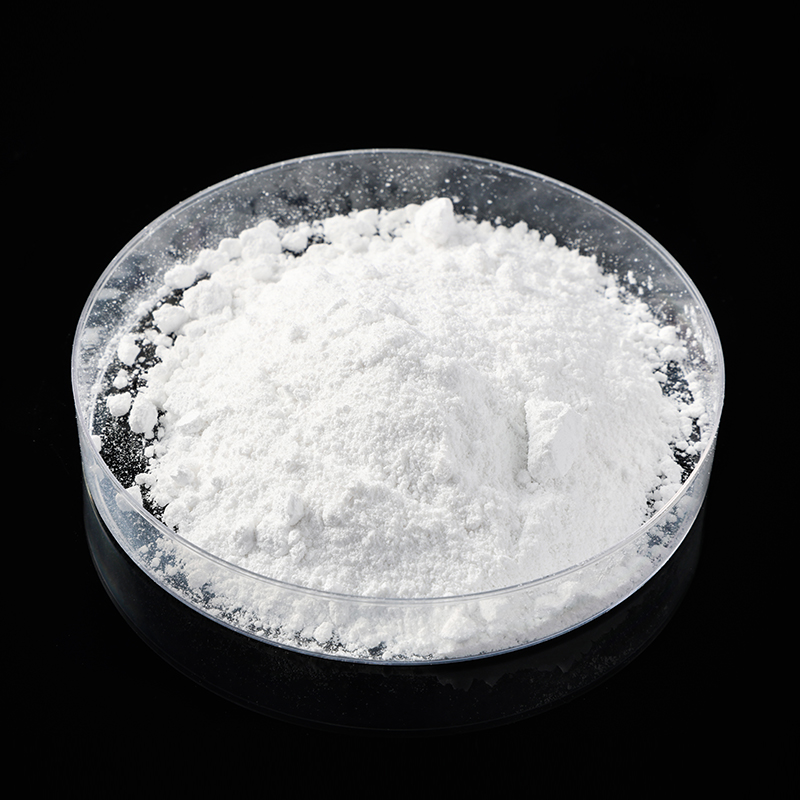
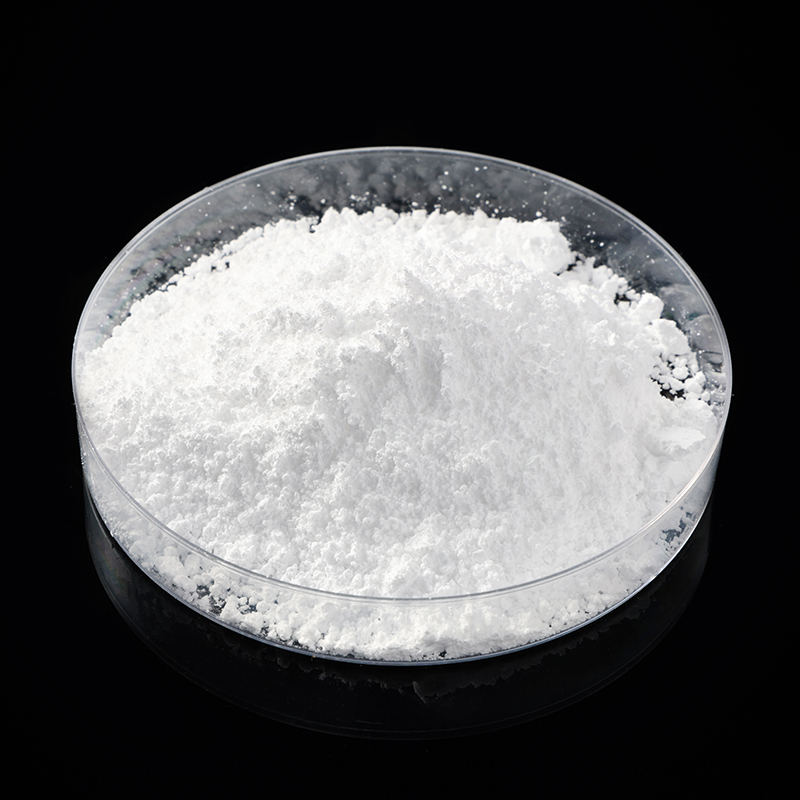
Lithium fluoride (chemical formula LiF, CAS number 7789-24-4) is a white crystalline ionic solid at room temperature. It adopts the rock salt (NaCl-type) crystal structure, with each lithium ion surrounded by six fluoride ions in an octahedral coordination geometry and vice versa. Lithium fluoride has a melting point of 848 degrees Celsius, a boiling point of 1,676 degrees Celsius, and a density of 2.635 grams per cubic centimetre, making it one of the most thermally stable simple binary fluorides and qualifying it for use in nuclear reactor moderator systems, high-temperature molten salt processes, and as an optical window material for extreme ultraviolet and X-ray wavelengths where virtually no other crystalline material is transparent.
The lithium fluoride properties that most frequently determine its selection over alternative materials in technical applications are its exceptional UV and vacuum UV optical transparency (usable from approximately 120 nm wavelength into the mid-infrared), its low neutron capture cross-section for the lithium-7 isotope (making enriched LiF valuable in nuclear reactor systems), its very high melting point enabling molten salt applications, and paradoxically its toxicity (it is among the more toxic simple inorganic salts due to the systemic fluoride release on dissolution), which constrains handling procedures and end-use applications.
The lithium fluoride molar mass of 25.939 g/mol is derived from the IUPAC (International Union of Pure and Applied Chemistry) standard atomic weights of its two constituent elements. Understanding the calculation and the practical significance of this value is essential for laboratory chemists, industrial process engineers, and researchers working with lithium fluoride in any application involving stoichiometric calculations, solution preparation, or material dosing.
The calculation of lithium fluoride molar mass applies directly to the molecular formula LiF, which contains one lithium atom and one fluorine atom per formula unit:
Because fluorine is monoisotopic, the uncertainty in the lithium fluoride molar mass arises entirely from the variation in lithium isotopic composition between different natural samples. Geological lithium sources vary in their lithium-6 to lithium-7 ratio depending on the formation process, and some commercially processed lithium compounds (particularly those derived from enriched nuclear material) have isotopic compositions significantly different from the natural average, producing lithium fluoride molar mass values that differ from the 25.939 g/mol standard. For nuclear applications using isotopically enriched lithium fluoride (greater than 99.99% lithium-7), the effective molar mass approaches 26.005 g/mol, while for lithium-6-enriched material the effective molar mass approaches 25.013 g/mol. These differences are operationally significant in high-precision nuclear engineering calculations and in isotope separation process design.
The lithium fluoride molar mass of 25.939 g/mol is used in routine calculations across all applications involving lithium fluoride:
| Compound | Formula | Molar Mass (g/mol) | Melting Point (degrees C) | Density (g/cm3) |
|---|---|---|---|---|
| Lithium fluoride | LiF | 25.939 | 848 | 2.635 |
| Sodium fluoride | NaF | 41.988 | 993 | 2.558 |
| Potassium fluoride | KF | 58.097 | 858 | 2.480 |
| Lithium chloride | LiCl | 42.394 | 610 | 2.068 |
| Lithium bromide | LiBr | 86.845 | 550 | 3.464 |
| Calcium fluoride (fluorspar) | CaF2 | 78.075 | 1,418 | 3.180 |
Lithium fluoride adopts the rock salt (halite) crystal structure, the same arrangement as sodium chloride and magnesium oxide. This face-centered cubic structure places each Li+ ion at the center of an octahedron of six F- ions, and each F- ion at the center of an octahedron of six Li+ ions. The unit cell contains four formula units of LiF with a lattice parameter of 4.027 Angstroms (0.4027 nm), one of the smallest lattice parameters among rock-salt-structure compounds, reflecting the very small ionic radii of both Li+ (0.76 Angstroms) and F- (1.33 Angstroms).
The lithium-fluorine bond in lithium fluoride is one of the most ionic of all chemical bonds in binary compounds, with a bond ionicity estimated at 92% by the Pauling electronegativity difference method (electronegativity difference of 3.0 between F at 3.98 and Li at 0.98, the largest electronegativity difference between any two elements in the main group). Despite this high ionicity, the lithium-fluorine bond retains a small but measurable covalent character estimated at approximately 8%, which influences the compound's optical properties and contributes to its unusually high hardness relative to other alkali metal fluorides.
The consequences of this near-perfect ionicity for lithium fluoride properties include:
The lithium fluoride properties that define its performance in technical applications span physical, thermal, optical, electrical, and chemical domains. This section provides a comprehensive reference of lithium fluoride properties with quantitative values where they are established in the scientific literature, to support material selection decisions in research, engineering, and industrial applications.
The optical lithium fluoride properties are among the most distinctive and technically significant of any inorganic crystal, and represent the primary basis for lithium fluoride's use in precision optical instrumentation and ultraviolet photonics:
| Property | Value | Conditions |
|---|---|---|
| Molar mass (lithium fluoride molar mass) | 25.939 g/mol | Natural isotopic composition |
| Crystal structure | Rock salt (NaCl type), space group Fm3m | Room temperature, ambient pressure |
| Lattice parameter | 4.0270 Angstroms | 25 degrees C |
| Density | 2.635 g/cm3 | 25 degrees C, solid |
| Melting point | 848 degrees C (1,121 K) | 1 atm pressure |
| Boiling point | 1,676 degrees C (1,949 K) | 1 atm pressure |
| Heat of fusion | 27.09 kJ/mol | At melting point |
| Lattice energy | 1,037 kJ/mol | Born-Haber cycle calculation |
| Water solubility | 2.7 g per 100 mL | 25 degrees C |
| Optical transparency range | 120 nm to 7,000 nm | Single crystal, UV to mid-IR |
| Refractive index | 1.392 | 589 nm, 25 degrees C |
| Optical bandgap | 14.2 eV | Direct bandgap |
| Mohs hardness | 3 to 4 | Room temperature |
| Thermal conductivity | 4.01 W/(m·K) | 298 K |
| Specific heat capacity | 1.60 J/(g·K) | 25 degrees C |
The technical applications of lithium fluoride span nuclear engineering, optical instrumentation, radiation dosimetry, battery technology, and metallurgical processing. Each application draws on a specific subset of lithium fluoride properties that makes it superior to alternative materials for that particular use.
Lithium fluoride is a central material in molten salt reactor (MSR) technology, which represents one of the most actively developed Generation IV advanced nuclear reactor concepts. Two key lithium fluoride properties drive its use in this application:
The short-wavelength transparency cutoff near 120 nm makes lithium fluoride single crystal windows indispensable in several optical instrument categories:
Lithium fluoride thermoluminescence dosimeters (TLD) are the most widely used personal radiation dosimeters in medical radiation physics, nuclear power plant health physics, and research institutions worldwide, exploiting a specific combination of lithium fluoride properties:
The electrochemical stability and ionic conductivity of lithium fluoride make it increasingly important in advanced battery technology:
Lithium fluoride has been used as a flux additive in metallurgical processing, glass manufacturing, and ceramic production for decades, exploiting its low melting point when combined with other fluoride salts and its ability to dissolve metal oxides and silicates at elevated temperatures:
Lithium fluoride is significantly more toxic than most other simple alkali metal halides, and safe handling requires understanding both the fluoride and lithium components of its toxicological profile, which act through different physiological mechanisms and require different medical management.
When lithium fluoride dissolves in body fluids (whether by ingestion, inhalation of dust, or absorption through damaged skin), fluoride ion is released and produces systemic fluoride toxicity through several mechanisms:
Lithium ion at the concentrations reached from lithium fluoride exposure also contributes to the toxicity profile through its effect on sodium transport in nerve and kidney cells, thyroid function suppression, and CNS effects including tremor, confusion, and at high doses cardiac conduction abnormalities. In clinical settings, lithium is used as a mood-stabilizing medication at carefully controlled blood levels of 0.6 to 1.2 mmol/L; blood levels above 2.0 mmol/L from any source (including lithium fluoride exposure) are considered toxic and require medical management.
The lithium fluoride molar mass is 25.939 grams per mole (g/mol). It is calculated by adding the standard atomic weights of lithium and fluorine: lithium has a standard atomic weight of 6.941 g/mol (reflecting the natural isotopic mixture of 92.5% lithium-7 and 7.5% lithium-6), and fluorine has a standard atomic weight of 18.998 g/mol (fluorine is monoisotopic, consisting exclusively of fluorine-19). Adding these two values gives 6.941 + 18.998 = 25.939 g/mol. The lithium fluoride molar mass of 25.939 g/mol is among the smallest of any binary ionic compound, a consequence of lithium being the lightest metal and fluorine being the lightest halogen. For isotopically enriched lithium fluoride used in nuclear applications (greater than 99.99% lithium-7), the effective molar mass is slightly higher at approximately 26.005 g/mol; for lithium-6-enriched material, it is approximately 25.013 g/mol.
Lithium fluoride has a melting point of 848 degrees Celsius despite its very low molar mass of 25.939 g/mol because its melting point is determined by its lattice energy, not its molar mass. The lithium fluoride lattice energy of 1,037 kJ/mol is the highest of all alkali metal halides, arising from the exceptionally high charge density of both the very small Li+ ion (ionic radius 0.76 Angstroms) and the F- ion (ionic radius 1.33 Angstroms), which allows the two oppositely charged ions to approach each other more closely than in any other alkali metal halide, producing stronger electrostatic attraction per ion pair. Melting requires sufficient thermal energy to overcome this lattice energy and disrupt the crystal structure, so the higher the lattice energy, the higher the melting point regardless of the formula mass. This explains the anomalous position of lithium fluoride among the alkali metal halides: it has the smallest formula weight but the highest melting point, reflecting the dominance of ionic interaction strength (determined by ion size and charge) over formula mass in determining thermal stability of ionic crystals.
The most unique optical property among the lithium fluoride properties is its ultraviolet transparency cutoff at approximately 120 nm wavelength, which is the shortest of any conventional ionic crystal optical material and allows lithium fluoride windows to transmit vacuum ultraviolet (VUV) light that no other common window material can pass. This transparency extends from 120 nm through the visible spectrum and into the mid-infrared to approximately 7,000 nm, giving lithium fluoride single crystals a broader optical window than virtually any other single material available in a practical window format. The physical origin of this extraordinary VUV transparency is the very wide optical bandgap of 14.2 eV (the widest of any common ionic crystal), which means that VUV photons with energies up to 14.2 eV do not have sufficient energy to excite electrons across the gap and are therefore not absorbed. The cubic crystal structure ensures optical isotropy (no birefringence), which preserves beam polarization states in sensitive optical experiments. These combined lithium fluoride optical properties make it the material of choice for VUV spectroscopy, synchrotron optics, and excimer laser optics where no alternative offers equivalent performance.
Lithium fluoride is sparingly soluble in water, dissolving to a maximum concentration of approximately 2.7 grams per 100 mL at 25 degrees Celsius (equivalent to approximately 1.04 mol/L). This is anomalously low solubility for an alkali metal halide: for comparison, lithium chloride dissolves to 84 g/100 mL and sodium chloride to 36 g/100 mL under the same conditions. The anomalously low solubility of lithium fluoride is a direct consequence of its very high lattice energy (1,037 kJ/mol), which is the highest of all alkali metal halides and reflects the strong electrostatic attraction between the small, high-charge-density Li+ and F- ions. The hydration energies of Li+ and F- ions, though significant, are insufficient to fully compensate for this high lattice energy, leaving a net positive (endothermic) enthalpy of dissolution that limits equilibrium solubility. The solubility of lithium fluoride decreases slightly with increasing temperature (from approximately 2.7 g/100 mL at 25 degrees C to approximately 2.3 g/100 mL at 100 degrees C), which is also anomalous behavior for an ionic salt and reflects the thermodynamic balance of the dissolution process.
The most important lithium fluoride properties for nuclear reactor applications are: its thermal stability as a molten salt (with a melting point of 848 degrees Celsius and stability to above 1,400 degrees Celsius), which allows it to serve as the solvent for nuclear fuel salts in molten salt reactor designs; the very low neutron capture cross-section of isotopically pure lithium-7 (0.045 barns for thermal neutrons, versus 940 barns for lithium-6), which allows 7Li-enriched LiF to be present in the reactor core without significantly degrading the neutron economy; the high heat capacity and thermal conductivity that support efficient heat transport from the reactor core to the heat exchanger; and the chemical compatibility with uranium and thorium fluoride salts that allows these fissile materials to be dissolved in the molten LiF-based salt at concentrations sufficient for sustained nuclear chain reactions. The requirement for lithium-7 isotopic enrichment greater than 99.99% for reactor-grade LiF is one of the most demanding material specifications in any engineered system and represents a significant supply chain challenge for the commercialization of molten salt reactor technology.
Lithium fluoride is used in thermoluminescence dosimetry (TLD) through three distinct isotopic formulations that exploit different lithium fluoride properties for different radiation measurement objectives. TLD-100 chips use natural-isotopic-composition lithium fluoride doped with magnesium and titanium, which create electron trapping sites (color centers) proportional in number to the absorbed radiation dose; reading the accumulated dose involves heating the chip to 250 to 300 degrees Celsius, which releases trapped electrons and produces a light pulse measured by a photomultiplier tube. TLD-700 uses lithium-7-enriched lithium fluoride (greater than 99.99% 7Li), which is insensitive to thermal neutrons due to 7Li's very low neutron capture cross-section; this formulation measures gamma radiation only in mixed fields. TLD-600 uses lithium-6-enriched material (greater than 95.6% 6Li), which is highly sensitive to thermal neutrons due to 6Li's high capture cross-section (940 barns). By reading both TLD-700 and TLD-600 chips from the same location and subtracting, the separate gamma and neutron dose components can be independently quantified.
Lithium fluoride and calcium fluoride (CaF2, fluorite) are both widely used optical crystal materials, but they differ significantly in their lithium fluoride properties versus CaF2 properties in ways that determine their respective applications. Lithium fluoride transmits to a shorter wavelength cutoff (approximately 120 nm) compared to calcium fluoride (approximately 130 to 180 nm depending on crystal quality), making lithium fluoride the only option for the most demanding VUV applications below 130 nm. However, calcium fluoride has superior mechanical properties: it has a Mohs hardness of 4 (versus 3 to 4 for LiF), much lower cleavage tendency, better resistance to moisture and humidity (CaF2 is not hygroscopic, while LiF shows slight hygroscopicity with surface degradation on prolonged exposure to moist air), and greater resistance to laser-induced damage at high UV intensities. For excimer laser applications at 193 nm (ArF laser) and 248 nm (KrF laser) where both materials are transparent, calcium fluoride is preferred for its superior durability under high-repetition-rate laser irradiation. Lithium fluoride is uniquely required for VUV applications below 130 nm wavelength where CaF2 simply cannot be used regardless of its superior mechanical properties.
Lithium fluoride is significantly toxic, with an estimated oral lethal dose for adults of approximately 32 to 64 mg per kilogram body weight (LD50), corresponding to 2.2 to 4.5 grams for a 70-kilogram adult. Toxicity arises from both the fluoride component (which causes hypocalcemia by precipitating serum calcium as calcium fluoride, and inhibits multiple essential enzymes) and the lithium component (which interferes with sodium transport in nerves and kidneys and affects thyroid function). Safe handling requires: nitrile gloves and safety glasses as a minimum for solid material; a P3-rated dust respirator when handling fine powder to prevent inhalation; working in a fume hood when any dust generation is possible; strict hand washing before eating or touching the face; and no food, drink, or smoking in areas where lithium fluoride is handled. First aid for ingestion includes administering calcium gluconate or milk to precipitate fluoride and reduce absorption, followed by immediate emergency medical attention. Eye or skin contact requires copious water flushing for at least 15 minutes and prompt medical evaluation. Lithium fluoride aqueous solutions are also mildly basic (pH approximately 8 to 9) and should be handled with the same precautions as the solid material.
Lithium fluoride plays an increasingly recognized role in lithium-ion and lithium metal battery technology through its function as a key component of the solid electrolyte interface (SEI) layer that forms on the anode surface during initial battery charging. The SEI is a nanometer-scale passivation layer that forms as the electrolyte decomposes at the anode surface during the first few charge cycles; a LiF-rich SEI provides superior battery performance because LiF is simultaneously ionically conductive (allowing Li+ ions to pass through for battery operation), electronically insulating (preventing further electrolyte decomposition and self-discharge), mechanically stable (resisting cracking during the volume changes of repeated charge and discharge cycles), and chemically inert to the electrolyte and electrode materials. Research has demonstrated that batteries engineered with LiF-rich artificial SEI layers (deposited by physical vapor deposition or formed by fluorinating additives in the electrolyte) achieve dramatically improved cycle life compared to batteries with conventional SEI compositions, with lithium metal batteries showing stable cycling above 90% capacity retention after 500 cycles versus 60% without LiF SEI engineering. This role has made lithium fluoride a focus of significant battery research investment.
Lithium fluoride adopts the rock salt crystal structure (also called the halite structure, the same as NaCl), in which each Li+ ion is surrounded by six F- ions in an octahedral arrangement, and each F- ion is surrounded by six Li+ ions in an equivalent octahedral arrangement. This is the face-centered cubic structure with space group Fm3m, with a lattice parameter of 4.027 Angstroms. All of the alkali metal fluorides (LiF, NaF, KF, RbF, CsF) and most other alkali metal halides adopt the rock salt structure with the same space group, so lithium fluoride shares its crystal structure type with the entire family of alkali metal halides (with the exception of CsCl, CsBr, and CsI, which adopt the cesium chloride structure with 8-fold coordination due to the very large size of Cs+). What distinguishes lithium fluoride within this structural family is its extremely small lattice parameter (4.027 Angstroms, the smallest of all rock salt structure alkali metal halides, compared to 5.630 Angstroms for NaCl and 6.290 Angstroms for KCl), reflecting the very small ionic radii of both Li+ (0.76 Angstroms, the smallest alkali metal cation) and F- (1.33 Angstroms, the smallest halide anion). This compact structure is responsible for the high lattice energy, high melting point, low solubility, and wide optical bandgap that collectively define the unique lithium fluoride properties that distinguish it from all other members of the alkali metal halide family.
Copyright © 2023 Nantong Jinxing Fluorides Chemical Co., Ltd. All Rights Reserved.
 Custom Fluorine Chemical Suppliers