

 English
 中文简体
中文简体 Español
Home / News / Industry News / Where Does Fluorosilicic Acid Come From? Its Sources and Supply Explained
In 2026, municipal water systems in several parts of the United States announced that they were reducing or temporarily suspending fluoride dosing. The reason was not a dispute over water policy. It was a raw supply problem: fluorosilicic acid had become difficult to obtain, and utilities that had relied for decades on scheduled tanker deliveries suddenly found themselves waiting months for material. The shortage took many buyers by surprise because the chemical occupies a strange place in the industrial landscape: it is produced in significant volumes, yet almost no factory exists for the sole purpose of making it.
The short version is this: if you use fluorosilicic acid industrially, the compound you receive almost certainly began as fluorine locked in phosphate rock, was released as a gas when the rock was attacked by sulfuric acid, and was captured in a scrubber before being purified and sold. Even the "natural" material formed in volcanoes follows the same chemical steps. Everything that follows is an elaboration of that chain and its commercial consequences.
Fluorosilicic acid is, for practical purposes, a recovered material. The overwhelming majority of commercial fluorosilicic acid comes from the phosphate fertilizer industry, where it is captured from process gases during the conversion of phosphate rock into phosphoric acid. That simple fact explains more about the product than any specification sheet: why its availability moves with the fertilizer market, why quality differs between regions, why some grades are cleaner than others, and why a well-informed buyer treats supplier qualification as seriously as price negotiation.
This article traces the full path of fluorosilicic acid, from the fluoride-bearing mineral in the ground, through the chemical reactions that release it, to the scrubber where it becomes a marketable liquid, and finally to the practical decisions a purchasing or engineering team must make. It also covers the natural formation of the same compound in volcanic and geothermal settings, and the supply-chain realities that became painfully visible during the 2026 shortage.
Fluorosilicic acid is the commercial name for an aqueous solution of hexafluorosilicic acid, H2SiF6. It is also sold as hydrofluosilicic acid, hydrofluorosilicic acid, or simply FSA. The structure is simple enough to describe: one silicon atom in the center, six fluorine atoms arranged around it in an octahedral geometry, and two acidic protons attached to the hexafluorosilicate anion. The result is a strong diprotic acid, one of the strongest inorganic acids known.
In practice, buyers rarely meet the acid in any form other than a liquid solution. Commercial fluorosilicic acid is typically supplied at 20 to 25 percent H2SiF6 by weight. It looks like water with a faint straw or yellow tint and has a sharp, pungent odor. The first dissociation of the acid is essentially complete in dilute water, so it behaves as a strongly acidic solution wherever it is handled.
What the shorthand formula does not show is an equilibrium that matters in every storage tank, pump, and dosing line: H2SiF6 is in equilibrium with hydrogen fluoride and silicon tetrafluoride. Heating, evaporation, or contact with silica can shift this equilibrium toward SiF4, a volatile gas that can escape from vents, condense in cold parts of a system, or dissolve again in water. This is why fluorosilicic acid is stored in plastic, fiberglass, or rubber-lined tanks, why vents must be managed carefully, and why engineers cannot simply treat the liquid as if it were a stable strong acid.
The origin of the chemical matters because it determines what kind of manufacturing reality stands behind it. Sulfuric acid plants exist to make sulfuric acid. Caustic soda plants exist to make caustic soda. Fluorosilicic acid is different: almost no plant is built for the sole purpose of synthesizing it from basic materials. Instead, it is captured where fluorine is released as a side effect of another reaction, most often in the production of phosphate fertilizers. It is recovered, not manufactured in the conventional sense. That single distinction drives the rest of this article.
When a buyer understands this, many otherwise puzzling features of the market make sense. The supply curve follows fertilizer production, not downstream demand. The impurity profile follows the phosphate rock, not a controlled synthesis recipe. The number of qualified sources is limited by the number of recovery points, not by the number of companies that can mix two chemicals together. In short, the chemistry of the molecule is the easy part; the supply chain is where the real expertise is needed.
If there is a single answer to the question at the top of this article, it is this: commercial fluorosilicic acid comes from the wet-process production of phosphoric acid, the route that converts phosphate rock into the fertilizers that feed global agriculture. Understanding the chain requires looking first at the mineral, then at the reaction, and finally at the scrubber.
Phosphate rock is mainly a calcium phosphate mineral known as fluorapatite, with a formula often written as Ca10(PO4)6F2. Fluorine is not a contaminant in this mineral; it is a structural component. Depending on the deposit, phosphate rock carries between 2 and 4 percent fluorine by weight. When the rock is processed, that fluorine has to go somewhere, and under the conditions of wet-process phosphoric acid manufacture, much of it becomes volatile.
The wet process begins when phosphate rock is reacted with sulfuric acid and water. The simplified reaction for the extraction of phosphoric acid is: Ca10(PO4)6F2 + 10H2SO4 + 20H2O → 6H3PO4 + 10CaSO4·2H2O + 2HF. The calcium sulfate precipitates as gypsum, the phosphoric acid stays in solution, and hydrogen fluoride is released. This reaction shows the first volatile fluorine compound, but it is not the last.
Phosphate rock always contains silica, either as quartz grains or as silicate minerals. Hydrogen fluoride reacts swiftly with silica to produce silicon tetrafluoride: 4HF + SiO2 → SiF4 + 2H2O. Both HF and SiF4 are gases under process conditions. They evolve from the reaction slurry and later from the evaporators where phosphoric acid is concentrated. Without gas treatment, these compounds would be an emission problem; with gas treatment, they become the raw material for fluorosilicic acid.
Commercial fluorosilicic acid takes shape in the gas scrubbing section of a phosphate plant. Off-gases from the acidulation reactors and from the vacuum evaporators are drawn through scrubber towers, where they are contacted with water or a recirculating dilute acid liquor. Silicon tetrafluoride hydrolyzes in this liquor: 3SiF4 + 2H2O → 2H2SiF6 + SiO2. Part of the hydrogen fluoride in the gas also reacts with silicon tetrafluoride: SiF4 + 2HF → H2SiF6. The liquid leaving the scrubber is therefore an impure fluorosilicic acid solution, typically containing suspended silica and dissolved impurities from the phosphate rock.
Producers treat this crude liquor before sale. The silica precipitate that forms during hydrolysis, a gelatinous material, must be settled or filtered out. The acid is then adjusted to a saleable concentration, usually in the 20 to 25 percent range, and in some cases clarified further. Well-run operations will also monitor the concentration of free HF, because an excess of hydrogen fluoride changes the corrosive behavior of the product and its behavior in downstream chemical processes.
Not every phosphate fertilizer plant recovers its fluorine. Some older plants were designed without recovery equipment, and some operators have chosen to neutralize fluorine into insoluble calcium fluoride rather than sell it. Where recovery does take place, the fluorosilicic acid becomes a product line of its own, sold to water utilities, chemical companies, and metal treatment facilities. The decision to recover rather than neutralize is an economic one, influenced by the price of the acid, the cost of the scrubber system, and the local regulatory framework for fluoride emissions.
The fact that fluorosilicic acid is a recovery product from phosphate processing has structural consequences. First, the quantity available at any moment is set by how much phosphate rock is being processed, not by how much fluorosilicic acid customers want. If fertilizer demand drops, less acid is recovered. Second, the geographic distribution of supply follows the phosphate industry: major producing regions include Morocco, China, the United States, Russia, and Jordan. Third, because each site uses different rock and different process conditions, the quality of the acid varies from site to site in ways that a simple assay sheet only starts to capture.
Historically, fluorosilicic acid was recovered from plants making superphosphate, a simpler fertilizer product in which the acidulated rock is not separated from the calcium sulfate. Superphosphate plants operate with modest equipment, and their off-gas treatment varies widely. As the industry consolidated around large wet-process phosphoric acid plants, recovery shifted to scrubbers on the larger units, where volumes justified investment in dedicated storage and quality control. Today, buyers should expect their acid to originate from a large integrated phosphate facility with a modern scrubber train, because older or smaller plants rarely have the equipment needed to produce a consistent liquid product.
| Process stage | Fluorine behavior | Where FSA enters the picture |
|---|---|---|
| Acidulation reactor (rock + H2SO4) | HF and SiF4 evolve as gases | Off-gas is routed to the scrubber |
| Phosphoric acid evaporation | More SiF4 is released as the liquor concentrates | Evaporator off-gas is also routed to the scrubber |
| Gas scrubber | SiF4 hydrolyzes; HF combines with SiF4 | H2SiF6 solution is collected |
| Filtration and concentration | Silica precipitate is removed | Clear FSA solution is ready for shipment |
Fluorosilicic acid is not purely a product of industrial chemistry; it also forms in nature. The most dramatic natural source is volcanism. Volcanic gases carry hydrogen fluoride and, under many conditions, silicon tetrafluoride, both released when magma encounters fluoride-bearing minerals at high temperature. When these gases mix with water vapor, condensing steam, crater lakes, or rainwater, the same hydrolysis chemistry that happens in an industrial scrubber occurs in the atmosphere: silicon tetrafluoride reacts with water to form hexafluorosilicic acid and silica. Analyses of volcanic condensates from active vents have confirmed that H2SiF6 is a significant component of volcanic acidity in some systems.
Geothermal systems provide a second natural pathway. Deep geothermal brines circulating through fluoride-rich volcanic rocks can carry dissolved silicon and fluoride species. When the brine is brought to the surface and flashed to steam in a geothermal power plant, volatile silicon tetrafluoride can transfer to the steam phase. This is not a theoretical curiosity: operators of geothermal stations in several countries work to manage fluoride in condensate systems, and fluorosilicic acid is sometimes identified among the corrosive constituents that complicate geothermal energy production.
Beyond the phosphate industry, any high-temperature process that treats fluoride-bearing minerals can release fluorine into gas streams. Cement kilns, brick kilns, and smelters that use fluorite or phosphate materials generate hydrogen fluoride and silicon tetrafluoride in their off-gases, and some of these operations recover fluorosilicic acid as a secondary stream. However, the volumes are small compared with the phosphate route, and the product typically goes to the same handful of distributors rather than creating a genuinely independent source of supply.
A third pathway is incidental industrial formation. Whenever concentrated hydrofluoric acid comes into contact with silica or silicate glass, the etching reaction produces SiF4, and in aqueous conditions the silicon tetrafluoride can hydrolyze to fluorosilicic acid. Glass etching baths, the surface treatment of silicon wafers, and some metal finishing processes all generate small amounts of the compound in solution. These incidental streams are usually treated as waste or recycled on-site; they are not a meaningful commercial supply.
The natural occurrence of fluorosilicic acid is more than an interesting footnote. It demonstrates that the fluoride in phosphate rock was not an accident of geology. The fluorine that ends up in a tanker of commercial fluorosilicic acid went through the same hydrosphere-atmosphere cycle over geological time, was incorporated into marine sediments, and eventually became part of phosphate deposits. The industrial process is simply a fast, controlled version of a natural geochemical cycle that has been running for millions of years.
No discussion of the origins of fluorosilicic acid can ignore the terminology debate. Advocacy groups have described the acid as a hazardous waste byproduct of the phosphate industry, and the phrase has appeared in public discussions of water fluoridation for decades. The term "waste" carries emotional weight, so it is worth separating the chemistry from the label.
In chemical terminology, a byproduct is simply a substance formed incidentally in a reaction that was intended to produce something else. By that definition, fluorosilicic acid is unambiguously a byproduct of phosphate processing. Whether it is also a waste depends on how it is managed. If a plant captures the acid in a scrubber only to comply with air emission limits and then neutralizes it, the captured liquid is effectively a waste stream. If the same plant stabilizes it, filters it, analyzes it, and sells it to industrial customers under a specification, the material has been converted into a coproduct. The change from waste to coproduct is not a chemical change; it is an operational decision.
For a buyer, the label matters far less than the practice. A seller who treats fluorosilicic acid as an opportunity to avoid disposal cost will typically offer minimal documentation, inconsistent color and concentration, and little information about trace contaminants. A manufacturer that operates fluorine recovery as a serious product line will provide batch certificates, clear specifications, and stable quality. These differences are the real-world consequence of the byproduct-versus-waste debate, and they should be part of the supplier interview process.
Fluorosilicic acid is a rare example of a chemical whose quality is substantially written before the manufacturer starts purifying it. Because the acid is recovered from the reaction of sulfuric acid with phosphate rock, every impurity that leaves the rock and survives the scrubber ends up somewhere in the liquid. Phosphate deposits differ dramatically in trace element content. Some are rich in cadmium, arsenic, uranium, lead, or chromium; others are relatively clean. Acid from one region may meet the most stringent drinking water specifications without any special treatment, while acid from another region requires careful purification to reach the same standard.
The main process-related variables are equally straightforward. Suspended silica forms as a byproduct of the hydrolysis step and must be removed by settling or filtration; if it remains, it can plug dosing pumps and density sensors. Free hydrogen fluoride, which appears when the scrubber chemistry favors HF absorption rather than complete conversion to H2SiF6, raises the corrosivity of the product and requires careful materials selection for storage and dosing. The overall assay controls the dose calculations and the transportation cost per unit of fluorine delivered.
| Parameter | Typical commercial range or limit | Why it matters |
|---|---|---|
| H2SiF6 assay | 20–25% w/w | Dosing calculations, transport economics |
| Free HF | Usually ≤ 1% w/w | Corrosivity, fuming, use restrictions |
| Suspended silica | Low or filtered | Plugging of pumps and dosing lines |
| Iron | Dependent on grade | Color and staining in metal treatment |
| Heavy metals (As, Pb, etc.) | Specified limits per standard | Drinking water safety, discharge permits |
| Chlorides | Specified limits | Corrosion in stainless steel systems |
A reliable certificate of analysis should report, at minimum, the H2SiF6 assay, density, free HF content, suspended matter, and key impurity elements. For drinking water applications, the relevant heavy-metal limits are usually those recognized by national drinking water standards; for industrial metal treatment, process-specific limits on iron, chlorides, and other elements may be more important than the drinking water criteria. The right approach is to request the supplier's standard specification, then compare it with the requirements of your own application before the first sample arrives.
An independent sampling and testing protocol is the only reliable way to confirm what a supplier is shipping. A sample drawn from a delivery can be verified at a local laboratory for assay, density, and free HF within hours, and trace elements within a few days. Buyers who integrate a simple incoming inspection into their receiving procedure catch concentration inconsistencies, dilution, or contamination early, before the material goes into the process and causes a wasted production shift.
The 2026 shortage of fluorosilicic acid in the United States was a practical demonstration of the structural fragility described above. In the preceding years, the country's phosphate fertilizer industry had consolidated, and the number of plants recovering fluorosilicic acid had fallen to a small handful. When some of those facilities reduced output because of fertilizer market conditions or unplanned outages, there was no spare production anywhere else to make up the difference. Domestic utilities and industrial users began competing for limited inventory, and prices rose sharply.
Stockpiling, the obvious response, is harder than it sounds. Fluorosilicic acid is a corrosive liquid with a specific gravity around 1.25 at typical commercial concentrations. It must be stored in compatible plastic, fiberglass, or lined steel tanks, and it is generally transported in quantities limited by road and rail weight regulations. A municipality that normally uses a few thousand litres per month cannot economically store a year of supply. The same constraints affect distributors, so inventory buffers throughout the chain are thin.
The international picture reinforces the same lesson. Global fluorosilicic acid supply is concentrated in the phosphate-producing regions, and trade has to overcome the logistics of shipping a hazardous, corrosive liquid across borders. ISO tank containers with rubber lining are the standard for intercontinental movement, and both the number of containers and the number of handling terminals are limited. This is not a product that can be redirected quickly when one region faces a shortfall.
What tightened the market in 2026 was pressure from both ends. On the supply side, phosphate producers contended with higher energy costs, operational constraints, and in some jurisdictions stricter environmental regulation of gypsum and fluoride residues. On the demand side, utilities kept their fluoridation programs running as best they could, while industrial demand for aluminum fluoride, surface treatment, and other fluorine applications did not disappear. The result was a market where long-standing contracts mattered, spot supply was scarce, and the balance of power moved to producers with direct access to recovery plants.
Price behavior follows from the same structure. Because the acid is a byproduct, its production cost is not the driver of its price; the driver is the balance between the limited recovery volume and the demand from utilities and industry. Buyers accustomed to seeing commodity chemical prices move with raw material costs will notice that fluorosilicic acid behaves differently. Contract structures that tie volume commitments to price reviews are often more effective than simple spot negotiations.
For industrial buyers, the lesson of the shortage is not that fluorosilicic acid is an unreliable product; it is that reliability is a property of the supplier chain, not of the chemical itself. A buyer whose supplier controls its own manufacturing site and recovery process has a fundamentally different risk profile from a buyer who depends on a trader sourcing from the open market. That difference becomes visible precisely when the market tightens.
The practical implication of everything above is that purchasing fluorosilicic acid requires more than comparing prices. It requires verifying a small number of critical facts about the supplier, the production route, and the quality system.
The first question is perhaps the most important: where exactly is the acid made, and which process step produces it? A manufacturer that owns a fluoride production facility and operates fluorine recovery as a controlled process can demonstrate batch data, explain variations in feed material, and show what steps are taken to remove silica and stabilize the acid. A trader, by contrast, can only present what the original producer provided. For a corrosive, impurity-sensitive chemical, the difference between first-hand knowledge and resold documentation is substantial.
Nantong Jinxing Fluorides Chemical Co., Ltd., a Chinese fluorochemical manufacturer with roots dating to 1975, is an example of a producer that treats fluorosilicic acid as a core product line rather than a disposal stream. The company describes its 2010 production base as equipped with advanced technology and strict testing protocols, and its product catalog covers the full family of inorganic fluoride compounds including fluorosilicic acid. For an industrial buyer, that kind of background offers a level of traceability that a simple brochure cannot provide.
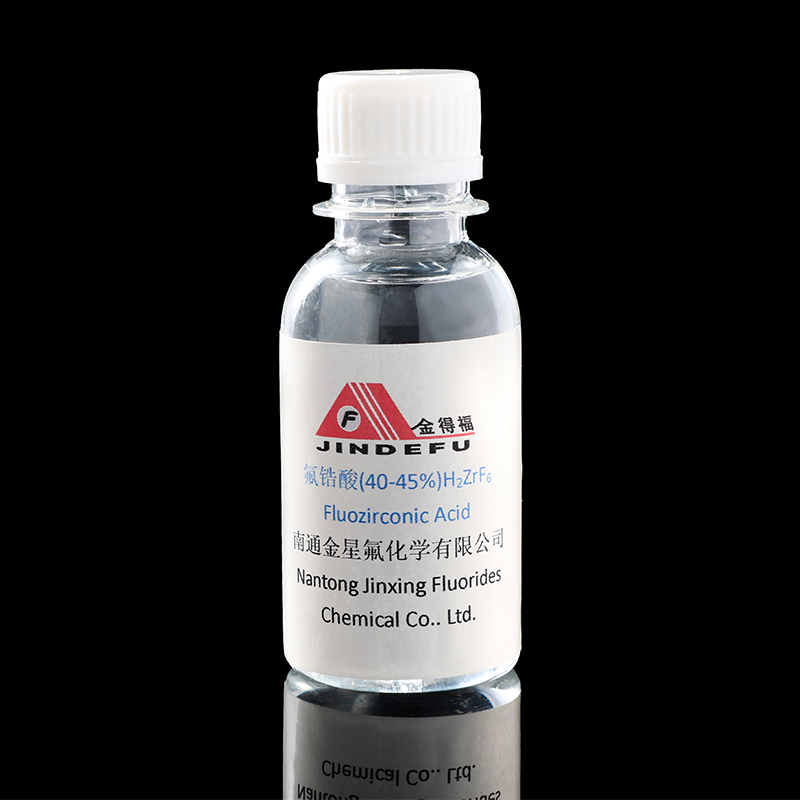
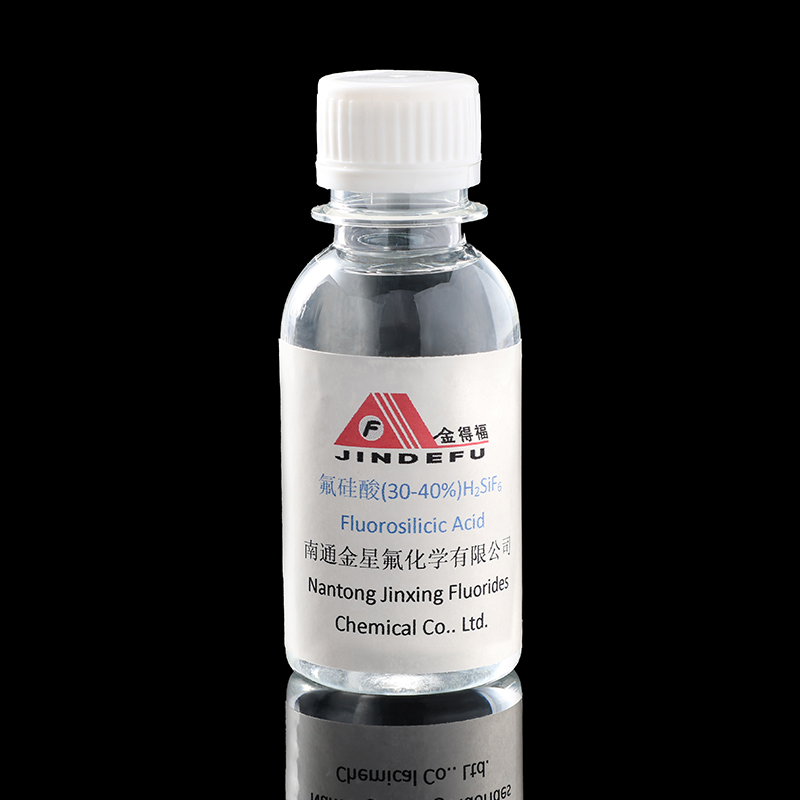 Fluorosilicic Acid from Nantong Jinxing Fluorides ChemicalThis listing presents fluorosilicic acid as a core product from a Chinese producer with roots to 1975, offering industrial buyers a traceable source for water treatment and fluoride compound manufacturing.View Product →
The larger point is that the supplier's identity should be verifiable. Confirm the physical location of the plant, the route by which the fluorosilicic acid is recovered, and the name of the person responsible for quality. If a supplier cannot answer these questions clearly, the product documentation is unlikely to be more reliable than the interview.
A certificate of analysis should accompany every batch. It should reflect actual testing of that batch, not a typical value copied into a template. Confirm the analytic methods behind the numbers, especially for heavy metals, free HF, and assay. Check whether the certificate distinguishes between the concentration at the producer's site and the concentration at your delivery point, because dilution during storage or loading is possible in poorly run facilities.
Fluorosilicic acid is available in a range of packaging, from 25-liter jerrycans and 200-liter drums to 1,000-liter IBC totes and bulk tank trucks. As a rule, the larger the unit, the lower the cost per tonne and the higher the demands on your storage infrastructure. The acid cannot be stored in carbon steel tanks or ordinary stainless steel. Compatibility with pumps, gaskets, and dosing equipment must be confirmed before the first delivery arrives.
| Check | Why it matters |
|---|---|
| Confirmed production site and process | Distinguishes manufacturer from trader; indicates consistency |
| Batch certificate of analysis | Confirms concentration and contaminant limits |
| Traceability of raw material origin | Anticipates impurity profile changes |
| Packaging appropriate for your volume | Reduces handling risk and cost |
| History of reliable delivery | Supply continuity is the real product |
Most experienced buyers begin with a small trial order before committing to a long-term supply agreement. A trial order tests the mechanical aspects of supply, packaging, documentation, and delivery reliability, none of which appear on a laboratory report. If a supplier cannot deliver a five-tonne order smoothly and document it correctly, it is unlikely to perform better with a contract that runs for years.
Each of these items is a small test of supplier quality. A supplier that has documents ready, knows the process behind them, and can explain deviations is in a different category from one that only promises price advantages. In a market where the underlying chemical comes from a byproduct stream, verification is not bureaucracy; it is the whole game.
Most consumers of fluorosilicic acid never see it; they drink it, in the sense that it is added to municipal water supplies in very small, controlled doses to prevent dental caries. But water fluoridation consumes only a portion of the world's output. The same acid is a raw material for a surprising number of industrial products.
The largest industrial use is in the manufacture of aluminum fluoride and synthetic cryolite, which are consumed in the electrolytic smelting of aluminum. Both compounds can be produced from fluorosilicic acid and alumina. This route matters globally because it allows the fluorine that would otherwise be discarded from phosphate processing to re-enter the industrial fluorine economy.
Metal surface treatment is another significant field. Fluorosilicic acid is used in some formulations for aluminum bright-dipping, anodizing, and the preparation of metal surfaces prior to coating or plating. The acid also finds applications in the production of other fluorosilicates, such as sodium fluorosilicate used in water fluoridation programs that prefer a solid dosing chemical, and potassium or ammonium fluorosilicates used in specialty ceramics and soldering.
Regulatory context matters as well. In the European Union, uses of fluorosilicic acid are assessed under chemical regulations such as REACH, and drinking water adjuncts in many countries must be certified against national standards. Industrial buyers in metal finishing or ceramics should check whether the grade supplied for process use meets local environmental discharge limits, because impurities such as fluorides in wastewater are typically regulated at the point of discharge.
A separate but growing category is the conversion of fluorosilicic acid into individual fluorides and hydrogen fluoride derivatives. Rather than shipping the acid as an end product, some manufacturers use it as an input to produce more concentrated chemicals. These conversion routes have received renewed attention because they turn a fertilizer byproduct into a strategic source of fluorine supply. For a more detailed overview of the roles this compound plays across modern manufacturing, our article on how fluorosilicic acid supports modern industry with its versatile applications describes the application range in depth.
The answer to the question "where does fluorosilicic acid come from" is therefore a chain, not a single factory. It begins with fluorapatite, the phosphate mineral that has carried fluorine through geological history. Sulfuric acid frees that fluorine as hydrogen fluoride, silica turns it into silicon tetrafluoride, and a scrubber combines the two gases back into an aqueous acid that can be filtered, concentrated, and sold. The compound also forms naturally in volcanoes and geothermal systems, a reminder that the chemistry is part of the earth's ordinary geochemical engine.
Understanding this chain changes how a buyer should think about fluorosilicic acid. It explains why the acid is tied to fertilizer markets, why its quality varies with rock provenance, why only a limited number of production sites supply the world, and why the 2026 shortage was a predictable structural event rather than a freak accident. It also points to the right purchasing strategy: work with a manufacturer that operates fluorine recovery as a real product line, verify the production route, test the actual batches, and plan inventories as if supply could tighten at any time, because in a recovered-chemical market it can.
For more than half a century, Nantong Jinxing Fluorides Chemical Co., Ltd. has been a producer of inorganic fluoride chemicals, and its product range includes fluorosilicic acid manufactured under controlled conditions. A buyer who understands where this chemical comes from will recognize the value of a supplier that has chosen to make it a genuine product rather than a disposal problem.
Copyright © 2023 Nantong Jinxing Fluorides Chemical Co., Ltd. All Rights Reserved.
 Custom Fluorine Chemical Suppliers