

 English
 中文简体
 Español
Home / News / Industry News / Fluorotitanic Acid: A Practical Buyer's Guide to Specifications, Handling, and Supply
A purchaser opens a drum labeled fluorotitanic acid and finds a clear to slightly yellowish liquid, a certificate of analysis showing 50% strength, and a note that the material is “corrosive.” The immediate question is rarely philosophical. It is practical: will this batch work in the intended bath, does the assay tell the whole story, and what should the next purchase specification say? The short answer is that fluorotitanic acid should not be bought on concentration alone. Buyers need to agree on titanium content, free fluoride, acidity, impurity limits, packaging, and handling controls before the first commercial order.
That conclusion matters because fluorotitanic acid sits at the intersection of several industrial needs: metal surface treatment, specialty chemical synthesis, glass and ceramic processing, and the manufacture of fluorotitanate salts. Small changes in composition can affect bath stability, coating appearance, reaction rate, waste treatment, and operator safety. A supplier that can provide a consistent specification, a clear analytical method, and a practical packaging plan is usually more valuable than a quotation that competes only on percentage strength.
This guide is written for technical buyers, process engineers, quality managers, and supply-chain teams who need to compare fluorotitanic acid grades without oversimplifying the chemistry. It covers what the material is, which specifications deserve attention, how to read a certificate of analysis, where the acid is used, how to handle and store it, and what to verify before approving a supplier.
Fluorotitanic acid is also called hexafluorotitanic acid. Its common industrial formula is H2TiF6, and the key structural unit is the hexafluorotitanate anion, [TiF6]2−. The compound is normally encountered as an aqueous solution rather than as a dry crystalline product. That single fact explains many procurement and handling issues: the material is not a simple powder that can be described by purity alone, and its behavior depends on concentration, temperature, acidity, and the equilibrium between fluoride species in water.
The CAS number commonly associated with fluorotitanic acid is 17439-11-1. In solution, the acid contributes titanium, fluoride, and acidity, but those three contributions are not interchangeable. A batch can have the same total fluoride content as another batch and still differ in free fluoride, free acid, titanium concentration, or the ratio between them. Those differences can matter in a bath where fluoride is consumed by complexation, where titanium is the active film-forming element, or where pH control is critical.
Fluorotitanic acid is a strong acid system and is corrosive. It can release hydrogen fluoride under some conditions, particularly when heated, concentrated, acidified, or mishandled. This does not make the material unusual in the fluoride industry, but it does mean that safety data sheets, engineering controls, and compatible materials of construction belong in the purchase decision, not in a folder that is opened only after delivery.
The chemistry also explains why “fluorotitanic acid” is sometimes described by more than one name in commercial documents. Hexafluorotitanic acid, fluotitanic acid, and titanium hexafluoride solution may appear in catalogues or older technical literature. Buyers should confirm the identity by CAS number, formula basis, and analytical specification rather than relying on the product name alone.
The most common commercial specification for fluorotitanic acid is a concentration figure, often expressed as a percentage of H2TiF6 or as a percentage of the solution. That figure is useful for freight, storage, and rough dosing calculations, but it does not answer the questions that determine process performance. A well-written specification should state the basis of the assay, the acceptable range, the analytical method, and the key impurity limits.
Titanium content is central because titanium is often the functional element in coating, catalysis, or ceramic applications. Fluoride content is equally important because fluoride participates in complexation, etching, and bath equilibria. Total acidity affects pH adjustment and neutralization load. Free fluoride and free acid can influence reaction rate, corrosion risk, and the stability of the solution. Iron, chloride, sulfate, and other impurities may be irrelevant in one process and unacceptable in another.
The table below is not a universal specification. It is a checklist of the parameters that should be discussed and fixed between buyer and supplier. The acceptable range for each item depends on the application, the dilution rate, the analytical capability of both parties, and the consequences of drift.
| Parameter | Why it matters | What to confirm before ordering |
|---|---|---|
| Assay basis and concentration | Freight, storage, dosing, and neutralization load all depend on strength; different bases can make two certificates look comparable when they are not. | State whether the percentage refers to H2TiF6, titanium content, total fluoride, or another basis, and give the acceptable range and method. |
| Titanium content | Titanium is often the active element in conversion coatings, catalysts, and specialty salts. | Agree on the analytical method, reporting unit, and allowable batch-to-batch variation. |
| Total fluoride and free fluoride | Fluoride drives complexation and etching; free fluoride can affect bath control and corrosion behavior. | Specify which fluoride value is reported and how it is measured; do not assume total fluoride equals free fluoride. |
| Acidity and pH | Acidity affects neutralization, bath pH, operator exposure, and storage stability. | Define whether acidity is reported as free acid, total acid, or pH of a specified dilution. |
| Chloride, sulfate, and other anions | These impurities can influence corrosion, bath life, and by-product formation. | Set limits based on the process, not on a generic catalogue grade. |
| Iron and heavy metals | Metal impurities can affect coating color, catalytic selectivity, and product quality in sensitive applications. | Use application-specific limits and ask for the detection method and reporting limit. |
| Appearance and insoluble matter | Cloudiness or sediment may indicate incomplete reaction, filtration issues, or storage changes. | Describe acceptable appearance and any filtration requirement in the purchase specification. |
| Density or specific gravity | Density helps convert between volume and mass and can reveal concentration deviations. | Report density at a stated temperature and use it as a cross-check, not as a substitute for assay. |
If you are comparing grades for a specific process, the fluorotitanic acid product page is a sensible starting point for basic product information and packaging discussion.
 Fluorotitanic Acid 40% Liquid for Industrial and Analytical UseColorless 40% liquid supplied in 200L closed plastic barrels; product details and packaging can support grade comparisons for specific processes.View Product →
The important point is not to accept a single assay figure as the whole specification. A supplier that can discuss the basis of the assay, the impurity profile, and the intended application is usually better prepared to control the process than one that treats the product as a generic liquid.
A certificate of analysis is only useful if the buyer understands what each line means. Start with the product identity: product name, grade, CAS number, batch number, manufacturing date, and quantity. Then check the assay basis. A certificate that says “50%” without stating whether that is H2TiF6, titanium, fluoride, or total solids is incomplete for technical decision-making.
Next, look at the analytical methods. Titration may be used for acidity or fluoride, ion-selective electrodes for fluoride, ion chromatography for chloride and sulfate, and inductively coupled plasma methods for titanium and trace metals. The method matters because different methods can produce different values, especially for fluoride species in equilibrium. If the buyer and supplier use different methods, the specification should define the referee method or the acceptable correlation between methods.
Batch traceability is another practical issue. Fluorotitanic acid is often used in baths that are sensitive to small shifts in composition. If a coating defect or yield problem appears, the first questions will be which batch was used, when it was received, how it was stored, and what the certificate showed. A supplier that can link packaging labels to production records and retained samples makes that investigation faster.
Do not overlook the appearance and packaging information. A clear liquid is not automatically a good batch, but unexpected cloudiness, sediment, or color change should trigger a question. Packaging material, closure type, liner compatibility, and fill weight should also be recorded. A certificate that is technically correct but silent on packaging can still leave the buyer with a handling problem.
For incoming inspection, many buyers use a combination of identity check, density, assay, pH, and appearance. The exact tests should reflect the risk. A process that consumes large volumes may need frequent batch verification; a smaller user may rely on supplier certificates plus periodic third-party checks. The decision should be written into the supplier quality agreement rather than left to individual habit.
Industrial fluorotitanic acid is typically produced by reacting a titanium-bearing raw material with hydrofluoric acid or fluoride-containing media, followed by filtration and adjustment to the target concentration. The exact route, raw material quality, and purification steps vary by manufacturer. That variation is one reason buyers should ask about the process controls that affect impurity profile and consistency, not just the final assay.
Raw material selection influences the levels of iron, chloride, sulfate, and other metals. Reaction control influences the completeness of conversion and the amount of unreacted or partially hydrolyzed species. Filtration and clarification influence appearance and insoluble matter. Concentration and storage conditions influence the equilibrium among fluoride species. A supplier that understands these variables can often adjust the process for a customer’s application; a supplier that only blends to an assay may not.
Our company has manufactured inorganic fluorides since 1975 and established a production base in Nantong in 2010. That history is relevant to buyers because fluorochemical manufacturing rewards experience: raw material selection, reactor control, analytical discipline, packaging, and safe handling are learned over many batches. Our product portfolio includes fluorotitanic acid and related fluorotitanate salts, which means we can discuss both the acid and the downstream salt family in the same technical conversation.
The manufacturing background also shapes the questions a buyer should ask. What is the source of titanium? How is free fluoride controlled? What filtration is used? How are batch records and retained samples managed? What changes would trigger a customer notification? These questions are more useful than a generic claim of “strict quality control.”
You can learn more about our broader inorganic fluoride product range through our company profile and product portfolio.
Nantong Jinxing Fluorides Chemical Co., Ltd. is a useful reference point for buyers who want to compare the acid, the ammonium salt, and the potassium salt within one supplier relationship.
Fluorotitanic acid is not a high-volume commodity in the same sense as sulfuric acid or caustic soda, but it has a focused set of industrial uses where titanium and fluoride chemistry provide a specific function. The application determines the specification, so it is useful to separate the main use families rather than treating all fluorotitanic acid as interchangeable.
One important use area is metal surface treatment, including titanium-containing conversion coatings and related pretreatment systems. In these processes, the acid can contribute titanium species and fluoride activity that influence film formation, surface etching, and coating adhesion. The operating window is often narrow: too little activity may produce an incomplete film, while too much may cause over-etching, unacceptable appearance, or bath instability.
For metal finishers, the relevant specification is rarely the shipping assay alone. They need to know how the product behaves at the dilution used in the bath, how free fluoride changes as the bath ages, how titanium is replenished, and how impurities accumulate. A supplier that can provide consistent batch composition and responsive technical support is more useful than one that offers a slightly higher concentration at a lower price but with wider variation.
The company profile notes that our products serve general industrial applications as well as aerospace, aerospace-related, and metal surface treatment customers. Those are demanding environments where documentation, traceability, and contamination control matter. Even when the final specification is simple, the purchasing process should reflect the seriousness of the application.
Fluorotitanic acid is also a precursor for fluorotitanate salts, including ammonium fluorotitanate and potassium fluorotitanate. In synthesis, the acid can be neutralized or reacted with a cation source to form the desired salt. The purity of the acid affects the purity of the salt, so buyers who intend to manufacture a salt should look upstream at chloride, sulfate, iron, and other metal impurities.
Reaction stoichiometry deserves attention. The acid is not simply a source of “titanium” or “fluoride” in a fixed ratio; the solution chemistry can shift with concentration and temperature. A process that works with one batch may need adjustment if the free fluoride or acidity changes. This is why a supplier’s batch-to-batch consistency is a technical benefit, not just a commercial convenience.
Titanium-fluoride chemistry also appears in glass and ceramic-related processing and in surface modification where controlled fluoride activity is useful. These applications are often sensitive to appearance, insoluble matter, and trace metals. A product that is acceptable for a general metal treatment bath may not be acceptable for an optical or electronic material process. The buyer should define the actual sensitivity rather than assuming that a higher-purity grade is always necessary or that a general grade is always sufficient.
Across these applications, the common thread is control. Fluorotitanic acid works because it delivers reactive titanium and fluoride species in a manageable form. It causes problems when the buyer treats it as a simple dilution of “titanium” and ignores the equilibrium chemistry. The specification should reflect the process window, and the supplier should be able to explain how the certificate relates to that window.
Fluorotitanic acid is part of a small but coherent family of fluorotitanate compounds. Ammonium fluorotitanate and potassium fluorotitanate are common derivatives, and each has its own solubility, handling, and application profile. Buyers who need both the acid and a salt can often benefit from discussing the entire family with one supplier, because the impurity profile of the acid carries through to the salt.
Ammonium fluorotitanate is used in applications where an ammonium-based fluorotitanate is preferred, including certain specialty chemical and surface-treatment uses. Potassium fluorotitanate is a solid salt with different solubility and handling characteristics. The choice between them should be based on the process, not on the assumption that one is simply a stronger or weaker version of the other.
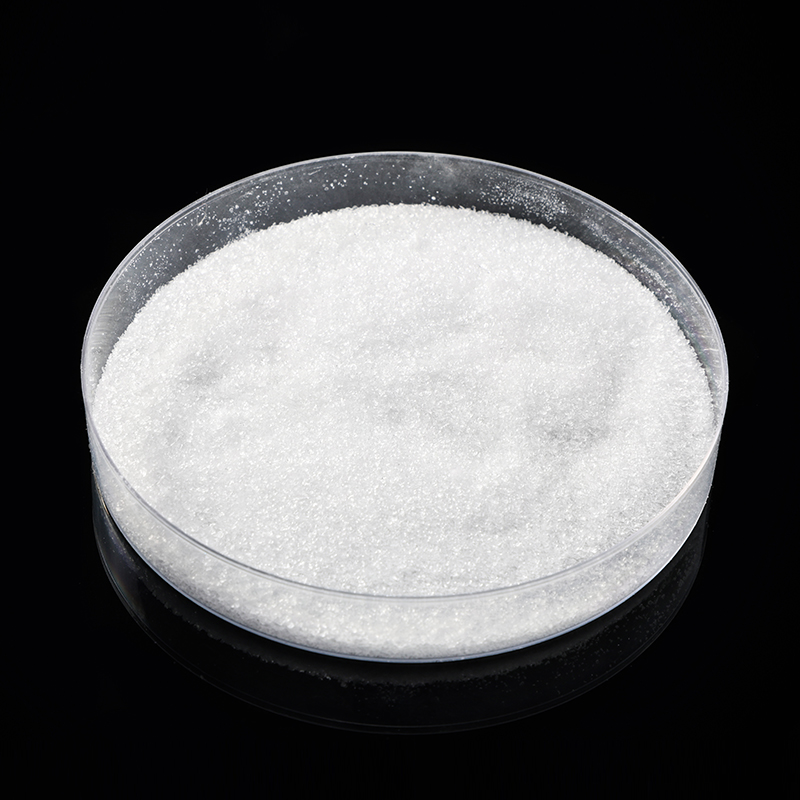
 Ammonium Fluorotitanate White Crystals for Analytical and Industrial UsesWhite crystals with ≥98% content in 25 kg composite bags; an ammonium-based fluorotitanate for analytical, ceramic, glass and surface-treatment uses, requiring moisture protection.View Product →
When comparing fluorotitanate salts, ask for the same discipline you would apply to the acid: assay basis, impurity limits, moisture or water content where relevant, particle size or appearance where relevant, and packaging. A salt specification that lists only “purity” can hide important differences in fluoride balance, ammonium or potassium content, and trace metals.
Potassium fluorotitanate is often selected when a potassium-based salt is compatible with the process and when solid handling is preferred. As with ammonium fluorotitanate, the buyer should confirm the exact grade, analytical methods, and storage requirements.
 Potassium Fluorotitanate White Flaky Crystals for Ceramics and MetallurgyWhite flaky crystals with ≥99% content, packed in 25 kg bags or 50 kg drums; a solid potassium-based salt for ceramic flux and titanium-alloy applications.View Product →
The existence of a salt family also affects procurement strategy. A buyer who purchases the acid for one line and the salt for another may be able to simplify supplier qualification, reduce analytical duplication, and improve traceability by working with a manufacturer that produces both. That is not a reason to accept an unsuitable specification, but it is a practical advantage when the technical fit is already established.
Fluorotitanic acid is corrosive and can cause serious eye damage and skin burns. It should be handled with appropriate engineering controls, personal protective equipment, and emergency arrangements. The safety data sheet is the governing document for the specific product and concentration supplied, but some general principles apply to procurement and plant design.
Because the material can release hydrogen fluoride, ventilation and exposure control are important. Closed transfer, local exhaust ventilation, and suitable respiratory protection for emergency or maintenance work should be evaluated by qualified safety personnel. Eye protection should be selected for chemical splash, not just dust. Face protection, chemical-resistant gloves, and protective clothing should be chosen for the actual task and checked for compatibility with the acid.
Materials of construction deserve early attention. Fluoride-containing acids can attack glass, cement, and some metals. Storage and transfer systems commonly use compatible plastics such as high-density polyethylene, polypropylene, or PTFE, depending on the concentration, temperature, and design. Gaskets, liners, dip tubes, and pump components should be confirmed with the supplier and the equipment manufacturer. A tank that is acceptable for a dilute solution may not be acceptable for a concentrated one.
Temperature control matters for both safety and product stability. High temperatures can accelerate hydrolysis and increase vapor pressure and corrosion risk. Freezing or excessive cooling can cause concentration gradients or crystallization in some fluoride systems, depending on composition. Storage areas should be cool, dry, well ventilated, and separated from incompatible materials such as strong bases, oxidizers, and materials that react with fluoride.
Spill response should be planned before delivery. Neutralization with an appropriate agent such as lime or soda ash may be part of the response, but the exact procedure should be defined by trained personnel using the SDS and site emergency plan. Do not assume that dilution with water makes the material harmless; dilution can still leave a corrosive fluoride solution and can generate heat. Contaminated equipment and spill residues should be managed according to local environmental requirements.
Training is part of the purchase. Operators who decant, sample, or clean transfer lines need to know the hazards, the compatible materials, the emergency shower and eyewash locations, and the reporting procedure for leaks. A technically excellent product can still create unacceptable risk if it is transferred through the wrong hose or stored in the wrong container.
Packaging is not a minor detail for fluorotitanic acid. The product is typically supplied in plastic drums, intermediate bulk containers, or dedicated tanks, depending on volume and customer capability. The packaging must be compatible with the acid, close securely, and protect the product from contamination and moisture. The buyer should confirm the fill volume, closure type, liner, labeling, and unloading method.
Sampling is another point where good intentions can go wrong. A sample taken from the top of a drum may not represent the whole batch if the material has separated or if condensation has occurred. A sample taken through a contaminated dipper can introduce iron or other impurities. A sample left in an unsuitable container can react with the container or absorb moisture. The sampling plan should specify the container, the technique, the amount, the label, and the storage conditions.
For larger users, bulk delivery and dedicated storage can reduce packaging waste and handling exposure. That approach requires a clear interface between supplier and customer: tank capacity, hose connections, transfer pressure, venting, metering, and emergency shutdown. It also requires agreement on cleaning and change-control procedures if the tank is used for more than one product.
Logistics planning should account for the hazardous nature of the material. The classification, packing group, labels, and transport documentation depend on the concentration and applicable regulations. The supplier should provide the correct documents, and the buyer should verify that the receiving site is authorized and equipped to accept the shipment.
Cold weather and long transit times can affect product appearance and homogeneity. If a shipment arrives with unexpected cloudiness, sediment, or a temperature extreme, the buyer should quarantine it and contact the supplier before use. A quick density check and visual inspection can prevent a batch from entering production when a question should be resolved first.
Supplier evaluation for fluorotitanic acid should go beyond price and lead time. Start with product identity and specification: does the supplier manufacture or trade the material, what grade is offered, and what analytical methods are used? A manufacturer that controls the reaction and purification steps may have more ability to adjust the product for a specific application than a distributor that blends or repackages.
Quality systems matter, but they should be verified in the context of the product. Ask which certificates apply, what their scope is, and how they are maintained. Ask how batch records, retained samples, deviations, and customer complaints are handled. Ask what triggers a change notification: a new raw material source, a process change, a concentration adjustment, or a packaging change. The answer should be specific.
Technical support is also part of the evaluation. A supplier should be able to explain the certificate, discuss the effect of dilution, recommend compatible materials, and respond to a process problem without guessing. For a product like fluorotitanic acid, where equilibrium chemistry matters, that support can shorten troubleshooting and reduce the risk of an expensive trial-and-error cycle.
Change control deserves particular attention. A new raw material source or a modified filtration step may not change the assay, but it can change trace impurities or the form of the fluoride species. If the application is sensitive, the buyer should require pre-notification and, where appropriate, a qualification sample before the change is implemented. The supplier’s willingness to accept that requirement is a useful indicator of its quality culture.
Finally, consider supply security. Fluorotitanic acid is a specialty material, and the number of qualified suppliers may be limited. A single-source strategy can be efficient, but it should be supported by inventory planning, alternate packaging, and a clear understanding of lead times. A second source is not automatically better if its specification is not equivalent; qualification takes time and should be planned before a crisis.
One common mistake is buying fluorotitanic acid as if it were a simple dilution of a single chemical. The concentration figure is important, but it does not capture free fluoride, acidity, titanium speciation, or impurity profile. A buyer who compares only percentage strength may choose a product that is cheaper per kilogram but more expensive in process adjustments and rejects.
Another mistake is accepting a certificate without checking the basis and method. “50%” can mean different things, and two laboratories can report different values for the same sample if the method and sample preparation differ. The purchase specification should remove that ambiguity before the first shipment.
A third mistake is ignoring packaging and materials of construction. Fluoride-containing acids can attack the wrong container, hose, gasket, or pump component. The result may be contamination, leakage, or premature equipment failure. Compatibility should be confirmed for the concentration and temperature actually used, not for a generic “fluoride solution.”
A fourth mistake is treating safety as a paperwork exercise. The SDS, labels, training, ventilation, and spill plan are part of the product’s fitness for use. A supplier that cannot provide the correct documents or discuss handling controls is not a low-risk choice, even if the price is attractive.
A fifth mistake is failing to plan for analytical verification. Even a reliable supplier can have a deviation. Incoming inspection, retained samples, and periodic third-party checks provide a safety net. The intensity of that net should match the criticality of the application and the volume purchased.
Finally, avoid assuming that one fluorotitanate salt can be substituted for another without qualification. Ammonium fluorotitanate and potassium fluorotitanate differ in cation, solubility, and handling behavior. The acid, the ammonium salt, and the potassium salt are related, but they are not interchangeable in every process.
Before approving a fluorotitanic acid supplier, write down the application, the dilution ratio, the operating temperature, and the consequences of a batch failure. Then define the specification in those terms. The checklist below is a concise way to organize the discussion.
The checklist is not a substitute for technical review, but it prevents the most common gaps. It also gives the supplier a clear signal that the buyer understands the material and expects a controlled product, not just a liquid in a drum.
Fluorotitanic acid is a useful industrial fluoride with a focused set of applications in metal surface treatment, specialty salts, catalysis, and related processing. Its value comes from the combination of titanium and fluoride chemistry, but that same combination makes the product sensitive to specification, handling, and supply consistency. The concentration on the label is a starting point, not a complete purchase description.
A sound procurement approach defines the assay basis, titanium content, fluoride values, acidity, impurities, appearance, packaging, and safety requirements. It verifies the certificate against the process need, confirms compatible materials, and plans for sampling and change control. It also recognizes that a supplier with manufacturing experience, analytical discipline, and responsive technical support can reduce risk in ways that a lower quotation cannot.
For buyers who need fluorotitanic acid or related fluorotitanate salts, the most reliable path is to start with the actual process conditions and work backward to a written specification. That conversation is more detailed than a price request, but it is also more likely to produce a repeatable result. In a specialty fluoride purchase, the cheapest drum is rarely the least expensive decision.
Copyright © 2023 Nantong Jinxing Fluorides Chemical Co., Ltd. All Rights Reserved.
 Custom Fluorine Chemical Suppliers